
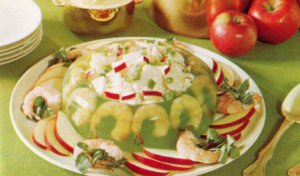
Jello with shrimp frosting. Chicken mousse. Liver pâté en masque. These innovative, if perhaps somewhat nauseating, recipes typically date to the late 1940s and 50s and have since faded out of popularity. While often visually appealing — at least in pictures — these recipes often featured an unusual combination of ingredients and relied heavily on Jell-O or aspic. What prompted this mid-century fascination with suspending pickled vegetables and canned meats in gelatin and calling it a meal?
World War II encouraged the food industry to invent new methods for extending the shelf-life through freezing, canning, dehydrating and other kinds of packaging. After wartime rationing and restrictions were lifted, manufacturers needed to find new ways to convince domestic consumers to continue purchasing these food products. To encourage brand loyalty, companies would print brand-specific cookbooks or recipes, trying to limit the recipe to foods made by their own company.
While companies often included newly invented recipes in their product advertisements, housewives also experimented with new cooking techniques meant to simply their kitchen routines. The idea of “better living through chemistry” permeated households. Jell-O successfully capitalized on this concept in their advertisements, which emphasized the simplicity of cooking with jello. Inventions like Jell-O salad and other Jell-O entrees allowed household cooks to present food in an appealing way while also preserving it for days longer.
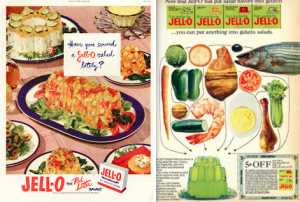
Home cooks would have used devices like the rose-gold colored mold in Bard Graduate Center’s study collection to shape their creations. Creations such as “Ring Around the Tuna” (chunks of tuna, pimientos, and cucumbers in molded lime Jell-O) would be poured into a mold and set before usually being served as a starter or salad.
Presentation was especially key. Another jello salad recipe suggests cutting vegetables like cucumbers and carrots into fish shapes to add to lime Jell-O. After it sets, the recipe instructs the cook to top it with layers of Hellman’s mayonnaise.
Although the fashion for homemade savory gelatin is no longer in vogue, the ideas behind 1950s food science remains present on grocery shelves today, where pre-packaged foods have only grown in popularity and Jell-O and Spam remain household names.
If you would like to try recreating a 1950s Jell-O recipe, the “Fall Fruit Souffle Salad” is transcribed below:
Fall Fruit Souffle Salad 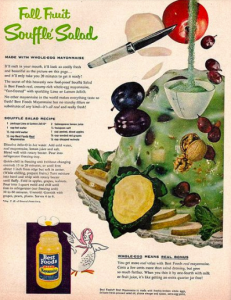
1 package Lime or Lemon Jell-O
1 cup hot water
Half a cup cup cold water
Half a cup Best Foods Real Mayonnaise
2 tablespoons lemon juice
Quarter teaspoon teaspoon slat
1 cup peeled, diced apples
Three quarter cups of seeded red grapes
Quarter cup chopped walnuts
Dissolve Jell-O in hot water. Add cold water, real mayonnaise, lemon juice and salt. Blend well with rotary beater. Pour into refrigerated freezing tray.
Quick-chill in freezing unit (without changing control) 15 to 20 minutes, or until firm about 1 inch from edge but soft in center. (While chilling, prepare fruits.) Turn mixture into bowl and whip with rotary beater until fluffy. Fold in apples, grapes, walnuts. Pour into 1 quart mold and chill until firm in refrigerator (not freezing unit) 50 to 60 minutes. Unmold. Garnish with grapes, pears, plums. Serves 4 to 6.
Post Author: Cindy Kok