
Like many of you, I am guilty of keeping packaging around my apartment way beyond the lifetime of the product it once held. From boxes of French macarons to sneakers, and a hoard of paper and plastic shopping and grocery bags underneath my sink, I am convinced I will use at some point. My reason for keeping these materials, which once housed food (which always go too quickly), clothing, or beauty products, amongst other things that are better stored outside their original packaging, is one of two. I either keep it because I appreciate its design (I am aware that many times I paid more because of the quality of this packaging and that I am indeed willing to pay more, because it was so aesthetically pleasing) or I keep it because of the prospect for reusability.
Packaging protects products and make convenient vessels for transportation, while simultaneously being informative about content and quality of the product inside. As much as the saying says “not to judge a book by its cover,” we do, we judge everything by the packaging it comes But if our main goal is to obtain what is inside the packaging why do some packages retain value even after their contents have been removed or consumed? In particular, what makes some packaging collectible and worthy of display?
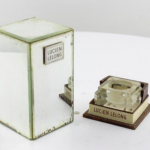
At the Bard Graduate Center, objects matter, but truthfully not all for the same reasons. Upon browsing the selection of objects for the upcoming exhibition, Introspective: Contemplations on Curating, I realized that some of the objects can be considered packaging containers for products, which would have been more valued in their primary life as commodities. This potential grouping includes: (1) A Puma “Clever Little Bag,” (2) A Lucien Lelong perfume box and (3) a compact case (not pictured), (4) an apothecary jar, (5) a tea canister, (6) an Old Fitzgerald whiskey bottle, and finally (7) a set of five sake cups in their original box, a $22.95 price sticker included.
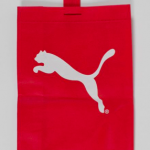 (1) is a book example of design, a solution to a problem combined with aesthetic consciousness, as it was a product of a redesign project with environmentally friendly goals, while (2) is a beautiful design pun, on the name of the perfume it once held, Mon Image, which is now missing.
 On the other hand, (3) still holds some powder inside the compact, but it is the metal container which now holds value as an example of cosmetic product design.
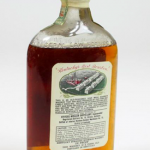 (6) is interesting because it remains unopened, holding the amber liquid people would have purchased this bottle for. Although, it could still be used as commodity, the story of the survival of this one whiskey bottle thwarts the power of commodity, as established by those who collected the bottle. (4) & (5)
once held tea & herbs, priced commodities, but it is their enduring functionality combined with their material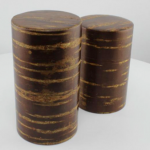
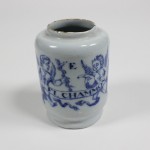 qualities that imbue them value. (7) is particularly interesting because although the reason why the box likely remains is for ease of storage of the cups, the price tag tells us more about the cups themselves.
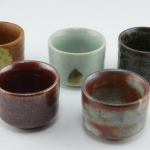
Here I presented one of the many ways in which these objects can be in conversation and be interpreted. Each year we spend hundreds and thousands of dollars just on packaging, which ends up in landfills, yet a very lucky few stand the test of time as someone chooses to pardon their life and preserve it for posterity for others to discover the stories that now fill these packaging containers.
A short bibliography on the history of packing and packaging design:
- The Total Package by Thomas Hine
- Package Design Workbook: The Art and Science of Successful Packaging by Steven DuPuis and John Silva
- Package and Print: The Development of Container and Label Design by Alec Davis
- Shelf Life: Modern Package Design, 1920-1945 by Jerry Jankowski
- Shelf Space: Modern Packaging Design, 1945-1965 by Jerry Jankowski
- The Art of the Label: Designs of the Times by Robert Opie
- Ecodesign by Silvia Barbero
Post Author: Angelik Vizcarrondo-Laboy